
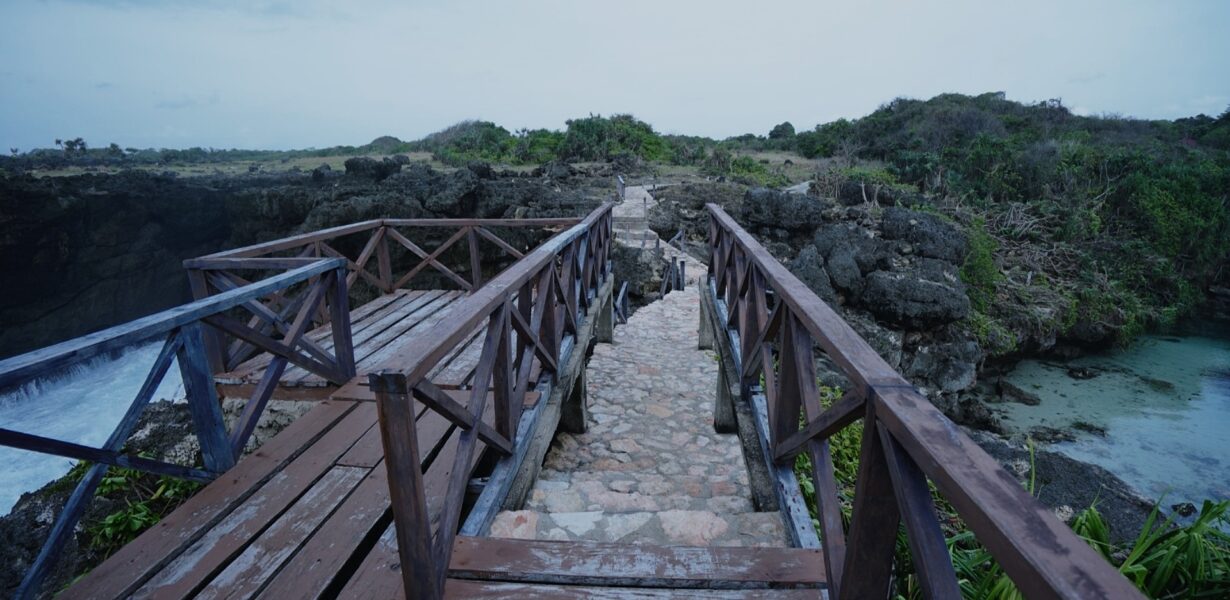
Photo by © Sumba.travel
One of the first things you notice about Sumba is how little it tries to impress. This carries over into the food, where meals are not about variety but about nourishment. On this island, tourism exists, but it stays on the sidelines, and the culinary landscape reflects a life that continues whether you are there or not. You eat where the people eat, small places with no menus, where Sumba food is cooked when you order. There is a comfort in that routine, especially after long days on the road. Getting around Sumba teaches you patience quickly, and finding a meal is no different.
Small Routines and the Daily Plate
Meals in Sumba are simple and familiar. The rhythm of the day dictates what is served, and the plate reflects the land around you. Whether you are resting between long drives or visiting a traditional village, the offerings remain consistent. Rice sits on the plate as the foundation, accompanied by vegetables on the side. Fish or chicken are added to the meal when they are available, often sourced from the immediate vicinity. This lack of pretense is what makes the experience memorable.
In these local spots, known as warungs, there is no staging. You are stepping into a living space, not a place built to be seen. For the first-timer, this might sound like too much effort, but the experience itself is very rewarding. It requires a shift in expectations. You learn quickly that food in Sumba isn’t about choice; it’s about what the island provides at that specific hour. Arriving prepared is essential; once you leave the main towns, choices become limited, and that is part of the tradeoff of exploring such a vast and humble landscape. But once you truly enjoy all aspects of it, visiting Sumba is the best experience.
The Flavors of the West and East
Sumba has two distinct personalities, and your experience with food shifts as the landscape changes. West Sumba feels closer and greener, with waterfalls tucked between hills and villages that still follow old traditions. In these cooler mornings, where mist settles over the hills, the food feels grounding and warm. The verdant greenery of the West provides a different backdrop for your morning meal, often shared in the vicinity of stunning lagoons and ancestral stone tombs.
As you travel eastwards, the landscape transitions into wide savannas and long, empty coastlines where the sky feels bigger than usual. In East Sumba, the scale of the landscape often becomes one of the most memorable aspects of the journey. Near towns like Waingapu, one of the most prominent towns on the island, the experience is defined by the maritime rhythm. Here, you might find yourself near Walakiri Beach, where dancing mangroves welcome visitors to a dramatic sunset. The dry landscapes of the East shift in color throughout the day, offering an unfathomable sea of dryland that feels like the edge of the world. Sumba food in the East reflects this openness, often featuring fresh catches from the vibrant markets.
Logistics and the Reality of the Road
Traveling with a local driver changes everything. They understand the road, the weather, and the rhythm of the day. A local driver knows exactly when to stop for a meal and which roadside warung offers the most authentic nourishment. Conversations happen naturally, and you start to see the island through their eyes instead of a map. Some days, the drive becomes the highlight as you pass empty fields and horses crossing the road.
Roads in Sumba can change from smooth to rough in minutes, and distances take longer than expected. There are no ride-hailing apps and no easy shortcuts. This infrastructure requires you to plan your days around one or two meaningful stops rather than trying to see everything at once. Trying to cover both sides too quickly usually leads to long days in the car and very little time to actually be present.
Connectivity is another factor to consider. The Internet works until it doesn’t. Some days it’s fine, but other days it disappears completely once you leave town. If you are looking for a place to eat, do not rely on digital maps; rely on the knowledge of your driver. Additionally, carrying cash is essential as ATMs are limited outside major towns. A budget trip, where you stay at guesthouses and eat at local warungs, might require $40 to $60 per day.
Respect and the Cultural Table
Sumba is a destination that values patience and awareness. The traditional villages where you might find a meal are living spaces, not attractions. It is essential to observe local customs to encourage meaningful interaction. Respectful behavior includes dressing modestly, covering shoulders and knees, especially since traditional communities tend to be quite conservative.
Always ask permission before taking photographs of people or their homes. Many of the structures and traditions, such as the peaked roofs called uma mbatangu, carry deep spiritual importance related to Marapu cosmology. Proposing a meal or an interaction within these heritages adds a layer of gravity to the moment. When you sit down to eat in these spaces, you are participating in a culture that values depth over convenience.
Final Notes for the First-Time Visitor
Sumba rewards travelers who slow down. The journey matters as much as the destination. Whether you are witnessing the intricate art of ikat weaving or sharing a simple plate of rice and fish, the island reveals itself at its own pace. The best time to visit is generally between April and October during the dry season, when the savanna is in its most distinct form.
If you arrive with flexible expectations and a sense of curiosity, Sumba leaves an impression that stays long after the journey ends. The food, like the island itself, does not try to impress you with variety or flair. Instead, it offers a sense of presence and a connection to a landscape that remains undeveloped and natural. By choosing to eat locally and move slowly, you are choosing an experience that values authenticity over staging. This is the prime destination for those who wish to travel without crowds and disturbances, finding beauty in the simple routines of daily life.