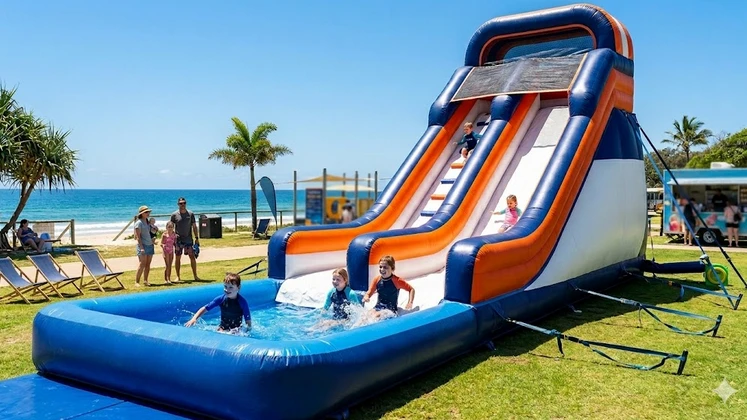
The Australian leisure and events market has been changing quickly over the past few years, driven by a growing demand for premium outdoor entertainment. A standout trend in 2026 is the rapid rise of commercial Inflatable Water Slides, which are becoming essential assets for suburban party hire businesses and coastal holiday parks alike. But for those looking to enter the market, the key question remains: are they actually a good investment in the long term?
A Shift Toward Flexible, Low-Risk Business Models
Traditional water parks require heavy upfront investment, long approval processes, and fixed locations. For many small and mid-sized operators, this model is simply too restrictive. Inflatable water slides offer a more flexible alternative. They can be set up within hours, relocated when needed, and used across different types of bookings—from backyard parties to large public events. In practical terms, a single unit can generate revenue across multiple channels, making it far more adaptable than fixed infrastructure.
Built for Australian Conditions: Why Material Quality Matters
Australia’s climate is one of the toughest in the world for inflatable equipment. High UV exposure and extreme heat can quickly damage low-quality materials. Slides made with thinner PVC often become brittle within a single season. Because of this, experienced operators now prioritise:
-
0.55mm to 0.9mm commercial-grade PVC
-
UV-resistant coatings
-
Reinforced stitching at stress points
Durability is not just about product lifespan—it directly affects safety, maintenance costs, and long-term profitability.
Safety and Compliance: Why AS 3533.4.1 Matters
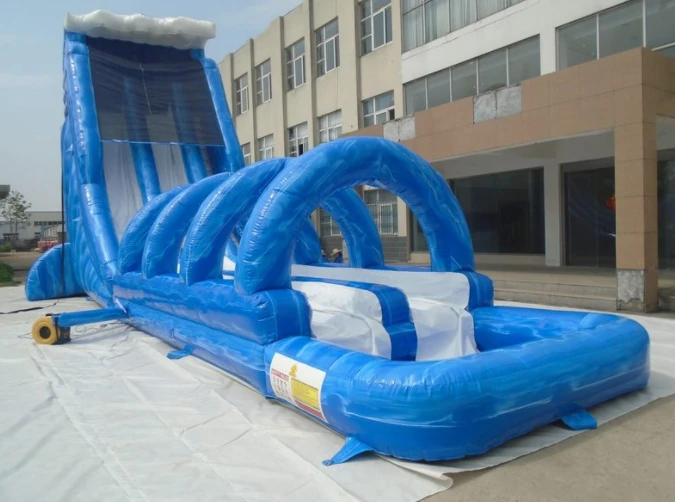
In Australia, safety compliance is essential for any commercial inflatable operation. The key standard is AS 3533.4.1, which regulates anchoring systems, structural design, wind resistance, and user safety requirements. More importantly, insurance providers rely on this standard. Operators using non-compliant equipment may struggle to obtain public liability insurance or secure bookings with councils and event organisers. As a result, serious buyers now focus heavily on compliance features such as reinforced anchor points, proper slide wall heights, and non-slip climbing areas.
Real ROI: How Quickly Can You Recover Your Investment?
For most investors, the biggest question is return on investment. In major Australian cities like Sydney, Brisbane, and the Gold Coast, commercial inflatable water slides are commonly hired at:
-
$500–$800 per day for mid-sized units
-
$800–$1,500+ per day for large slides
During peak summer periods, many operators report fully booked weekends and strong demand during school holidays. With consistent bookings, it is not uncommon for a well-managed unit to recover its cost within one to two peak seasons.
Choosing the Right Supplier
As the Australian market becomes more competitive, buyers are becoming more selective. It is no longer just about price. Operators increasingly look for suppliers who understand local safety standards, climate-related material requirements, and real-world rental use cases. Manufacturers with specific experience in the Australian market, such as Eastjump Australia, are often better positioned to provide equipment that performs reliably under local conditions.
Final Thoughts
Inflatable water slides are not just a short-term trend—they are becoming a core part of Australia’s outdoor entertainment industry. For operators who choose the right equipment, understand compliance requirements, and match their products to local demand, the investment can be both scalable and profitable. Success depends on planning, product selection, and execution—but for many Australian operators, the returns continue to be exceptionally strong in 2026.