Romania sits in a strange spot on the European travel map. It has medieval towns that rival anything in Central Europe, a mountain range that covers a third of the country, a Black Sea coastline, and Europe’s largest wetland — yet it receives a fraction of the visitors that Prague or Budapest do. That gap between what the country offers and how many people actually go is the main reason to consider it now, while prices are low and the main sights are not crowded.
This guide covers the regions worth your time, when to go, what things cost, how to get around, and how to structure a first trip. Everything here is based on how the country actually works on the ground, not on brochure descriptions.
Why Romania Works as a Travel Destination
A few concrete points before the details:
- Cost. Romania is one of the cheapest countries in the EU for travelers. A sit-down dinner with a drink runs €10–18 in most cities. Mid-range hotels are €40–70 per night. Intercity trains rarely exceed €20.
- Variety in a small area. Within a single week you can combine a capital city, medieval Saxon towns, alpine hiking, and painted monasteries. Distances are manageable — most key regions are 2–5 hours apart by car.
- Safety. Romania consistently ranks among the safer countries in Europe for violent crime. The usual precautions against pickpocketing in Bucharest apply, nothing beyond that.
- English. Widely spoken by anyone under 40, especially in cities and tourist areas. Romanian is a Romance language, so if you read French, Italian, or Spanish, signage is often decipherable.
- EU and Schengen membership. Romania joined the Schengen area fully in 2025, which removed border checks for travelers arriving from other Schengen countries and simplified multi-country itineraries.
The Main Regions and What Each One Offers
Transylvania
This is the region most first-time visitors build their trip around, and for good reason. The core circuit — Brașov, Sighișoara, Sibiu — consists of well-preserved Saxon towns founded by German settlers in the 12th–13th centuries.
- Brașov is the practical base: a walkable old town under Mount Tâmpa, good restaurants, and easy day trips to Bran Castle and Râșnov Fortress.
- Sighișoara has the only inhabited medieval citadel in Europe and is compact enough for half a day.
- Sibiu was a European Capital of Culture in 2007 and has the strongest café and museum scene of the three.
Bran Castle, marketed as "Dracula’s Castle," is the most visited site in the country. The Vlad the Impaler connection is thin — he may have been briefly imprisoned there — but the castle itself is worth an hour, and the surrounding Bran–Moieciu area has good rural guesthouses.
Bucharest
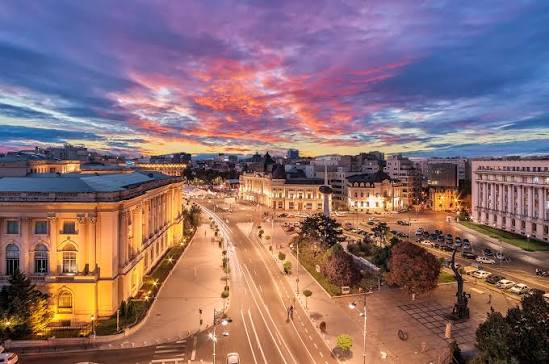
The capital divides opinion. It is not a postcard city; it mixes Belle Époque architecture, communist-era blocks, and glass office towers on the same street. What it does have:
- The Palace of the Parliament, the heaviest building in the world and a direct product of Ceaușescu’s regime. The guided tour is the best way to understand Romania’s recent history in one visit.
- A dense Old Town (Lipscani) with restaurants and bars, busiest from Thursday to Saturday.
- Strong museums: the Village Museum (open-air, over 270 relocated rural buildings) and the National Museum of Art.
Two days is enough for most visitors. Use it as your entry and exit point — Henri Coandă Airport (OTP) has the country’s best flight connections.
The Carpathian Mountains
The Carpathians arc through the middle of the country and offer hiking, wildlife, and winter sports at prices well below the Alps.
- Bușteni and Sinaia on the Prahova Valley are the most accessible mountain towns, 90 minutes by train from Bucharest. Sinaia also has Peleș Castle, the 19th-century royal residence and arguably the most impressive interior in the country.
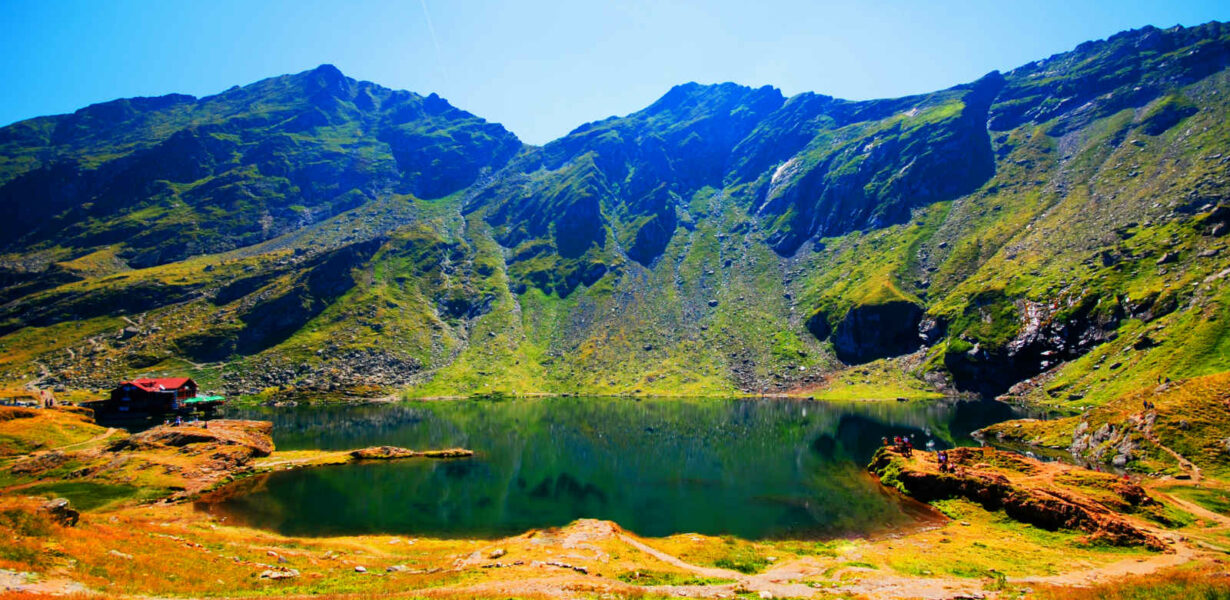
- The Făgăraș Mountains hold Romania’s highest peaks (Moldoveanu, 2,544 m) and the Transfăgărășan road — a high-altitude driving route open roughly from late June to October.
- Romania hosts the largest brown bear population in the EU, estimated at over 8,000 animals. Organized bear-watching hides near Brașov offer close to a 100% sighting rate in season.
Maramureș and Bucovina
The north is for travelers who want rural culture rather than headline sights. Maramureș preserves wooden churches (eight are UNESCO-listed), village life that still follows the agricultural calendar, and the Merry Cemetery at Săpânța with its painted, often humorous grave markers. Bucovina, to the east, has the painted monasteries — 15th–16th century churches with exterior frescoes that have survived 500 years of weather. Voroneț, with its distinctive blue pigment, is the best known.
Both areas require a car or a driver-guide. Public transport exists but will consume your schedule.
The Black Sea Coast and the Danube Delta
The coast runs about 245 km from the Danube Delta to the Bulgarian border. Constanța is the historic port city; Mamaia is the main resort strip; Vama Veche is the informal, younger alternative near the border. The season is short — mid-June to early September.
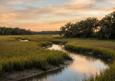
The Danube Delta is a different category entirely: 5,800 km² of channels, lakes, and reed beds, home to over 300 bird species including Europe’s largest pelican colonies. Access is by boat from Tulcea. Plan at least two nights; day trips only scratch the surface.
When to Go: Season-by-Season Breakdown
Timing matters more in Romania than in Western Europe because the continental climate produces real seasons. The table below summarizes what each period is good for.
| Season | Months | Typical daytime temp | Best for | What to avoid |
|---|---|---|---|---|
| Spring | Apr–May | 15–23 °C | City trips, monasteries, lower-altitude hiking, fewer crowds | High-mountain trails (snow lingers into June) |
| Summer | Jun–Aug | 25–35 °C | Black Sea coast, Transfăgărășan, mountain hiking, festivals | Bucharest in late July–August (hot, locals leave) |
| Autumn | Sep–Oct | 12–22 °C | Transylvania at its best: harvest season, foliage, wine regions | Coastal resorts (mostly closed by late September) |
| Winter | Dec–Mar | −5–5 °C | Skiing in Poiana Brașov and Sinaia, Christmas markets in Sibiu and Craiova | Rural Maramureș road trips (ice, short days) |
If you can only pick one window, mid-September to mid-October offers the best combination: stable weather, open mountain roads, harvest food on menus, and shoulder-season prices.
A Realistic 7-Day First-Trip Itinerary
This route covers the core of the country without turning the week into a driving marathon.
- Day 1 — Bucharest. Arrive, walk the Old Town, book the Palace of the Parliament tour for the afternoon.
- Day 2 — Bucharest → Sinaia → Brașov. Train or car up the Prahova Valley. Visit Peleș Castle in Sinaia (2 hours), continue to Brașov by evening.
- Day 3 — Brașov and Bran. Morning in Brașov’s old town, afternoon at Bran Castle and Râșnov Fortress.
- Day 4 — Brașov → Sighișoara → Sibiu. Two hours to Sighișoara, half a day in the citadel, then 90 minutes on to Sibiu.
- Day 5 — Sibiu. The two main squares, the Bridge of Lies, the ASTRA open-air museum (allow 3 hours; it is the largest of its kind in Romania).
- Day 6 — Transfăgărășan or Făgăraș villages. In season, drive the Transfăgărășan to Bâlea Lake. Off season, substitute the fortified church at Biertan or Viscri.
- Day 7 — Return to Bucharest. Around 4.5 hours by car; fly out in the evening or the next morning.
With 10 days, add the Bucovina monasteries or two nights in the Danube Delta. With 14, both.
What a Trip Costs
Approximate per-person figures for 2026, assuming double occupancy:
- Budget (hostels, trains, self-catering): €40–55 per day
- Mid-range (3-star hotels or guesthouses, restaurant meals, some tours): €80–120 per day
- Comfortable (4-star hotels, private driver-guide, all activities): €160–250 per day
Specific reference prices: Palace of the Parliament tour ~€10; Peleș Castle ~€12; Bran Castle ~€14; a full-day bear-watching hide session €60–90; intercity train Bucharest–Brașov €12–15 second class; a decent glass of Romanian wine €3–5. Card payment is accepted almost everywhere; keep small cash (lei, not euros) for rural areas and markets.
Getting Around
- Trains connect the main cities and are cheap, but slow — Bucharest to Brașov takes about 2.5–3 hours for 166 km. Fine for the Prahova Valley corridor; frustrating for the north.
- Rental cars cost €25–45 per day and open up Maramureș, Bucovina, and the mountain roads. Main roads are in good condition; secondary roads vary. The A1, A3, and A7 motorway segments have expanded significantly in recent years, cutting several key journey times.
- Domestic flights link Bucharest with Cluj-Napoca, Iași, and Timișoara from around €30 one way — useful if you want to start in Transylvania and skip the drive.
- Organized tours make sense for the Delta, bear watching, and the northern monasteries, where logistics eat time.
Booking: Independent vs. Local Operator
Romania is easy enough to organize independently if you have time to plan. The case for using a local operator is specific: itineraries that involve the Delta, Maramureș, or bear hides need local booking anyway, and a driver-guide converts long transfer days into commentary you would not get otherwise. Agencies such as Z tour handle both packaged circuits and custom routes, which is the practical middle ground — you set the regions and pace, they handle guesthouses, entrance bookings, and transport. If Romania is on your shortlist, their dedicated program pages are a useful reference point for route ideas even before you commit to anything; see Discover Romania by Z Tour for current circuits and departure dates.
Whichever way you book, reserve early for three things: Peleș Castle tours in summer, Delta accommodation in May–June (bird season), and Sibiu hotels around the Christmas market.
Practical Tips Before You Go
- Currency is the Romanian leu (RON), roughly 5 lei to the euro. Refuse dynamic currency conversion at ATMs and card terminals — always pay in lei.
- Tipping: 10% in restaurants is standard; round up for taxis.
- Driving: headlights on at all times outside cities; a vignette (rovinieta) is mandatory on national roads and is bought online in minutes.
- Stray dogs are far less common than a decade ago but still appear in rural areas; keep distance and carry nothing edible in outer pockets while hiking.
- Tap water is safe in cities; most people drink bottled in villages.
- Connectivity: EU roaming rules apply for European SIMs; local prepaid SIMs with generous data cost €5–10.
FAQ
Is Romania safe for solo travelers?
Yes. Violent crime rates are low by European standards. Standard urban awareness in Bucharest’s crowded areas covers the realistic risks. Solo female travelers report the same experience as in Central European countries.
Do I need a visa?
EU, UK, US, Canadian, and most other Western passport holders do not need a visa for stays up to 90 days. Romania is a full Schengen member as of 2025, so time spent there counts toward the 90/180 Schengen limit.
Is the Dracula theme worth pursuing?
Depends on expectations. Bran Castle is a legitimate historic site regardless of the fiction attached to it. Sighișoara is Vlad the Impaler’s actual birthplace. Treat the Dracula branding as a light overlay on real medieval history and you will not be disappointed.
How many days do I need?
Seven days covers Bucharest plus the Transylvania core. Ten lets you add the north or the Delta. Anything under five forces you to choose between the capital and the mountains.
Can I travel comfortably without speaking Romanian?
Yes. English is standard in hotels, restaurants, and attractions in every area a visitor is likely to reach. A few words of Romanian (mulțumesc — thank you; bună ziua — good day) are appreciated but not required.
When is the Transfăgărășan open?
The high section (Bâlea Lake area) typically opens in late June and closes with the first serious snow in late October. Exact dates vary yearly; check road authority announcements before building a trip around it.
The Bottom Line
Romania rewards travelers who want substance over polish: real medieval towns, working rural culture, serious mountains, and Europe’s most important wetland, all at prices that stopped being possible elsewhere on the continent years ago. Plan around the seasons, give the country at least a week, book the bottleneck items early, and the logistics take care of themselves.