
A sharp knife is safer and more efficient than a dull one. When the edge bites cleanly into food or material, you use less force, get cleaner cuts, and spend less time correcting mistakes. That’s true for a home cook, but it matters even more in a professional kitchen, a sharpening service, or a workshop where tools are used daily. The goal is not just “sharp enough to cut a tomato,” but a consistent edge geometry that stays sharp longer and behaves predictably.
The phrase “professional knife sharpeners” can mean different things, so in this guide we’ll define it clearly. A professional system is built for repeatable results, holds precise angles without drifting, and survives heavy use without loosening or flexing. It also adapts to different knives and steels, because pros rarely sharpen only one style of blade. If you want to buy once and rely on it for years, the details we cover below will help you choose well.
What Makes a Knife Sharpener Truly Professional?
Precision and Repeatability
Professional sharpening is about control. When you set a 15° angle on a chef’s knife today, you should be able to set that same 15° next week and touch up the edge without changing the bevel shape. Repeatability is what separates a stable, long-lasting edge from a random one. Tools that help you manage angles—either by skill (freehand stones) or by design (guided systems)—are central to professional results.
Durability and Build Quality
In pro environments, sharpeners see constant use. Cheap plastic guides, thin clamps, or wobbly rods wear out quickly and turn precision into guesswork. Look for rigid frames, tight fasteners, corrosion-resistant components, and smooth moving parts. Durable doesn’t always mean bulky, but it always means hard to knock out of alignment.
Versatility Across Knife Types
Professional users deal with variety: thin Japanese gyutos, thick European chef knives, paring knives used for delicate work, and often outdoor or utility blades. A professional system needs a broad angle range, stable clamping for different shapes, and compatibility with multiple abrasives. That versatility protects the knives you already own and the ones you’ll own later.
Identify Your Needs Before Choosing a Sharpener
What Knives Are You Sharpening?
Start with your knives because they dictate everything else. European knives are usually softer steel (often 54–58 HRC) and are commonly sharpened around 18–22° per side. Japanese knives tend to be harder (often 60+ HRC) and take 12–17° per side with less edge deformation. If you sharpen thin, hard Japanese blades, you need precise angle control and fine abrasives; if you maintain tougher European knives, you may prioritize speed and durability.
How Often Will You Sharpen?
Frequency changes the kind of system you want. Daily professionals need an efficient workflow for touch-ups and periodic full sharpenings. Occasional users can accept longer setup times. If you sharpen several knives in a row, stable clamping, quick angle changes, and smooth stone travel become major factors, not just “nice extras.”
Where Will You Sharpen?
A bench-mounted system is great when you have a dedicated spot. If you sharpen in different locations—at job sites, in a restaurant back room, or on trips—you may need a more portable system. Portability shouldn’t sacrifice stability; it should just reduce footprint and speed up packing.
Main Types of Professional Knife Sharpeners
Freehand Whetstones
Whetstones are the oldest professional method and still widely used. Their main strength is flexibility: you can sharpen almost any blade shape and produce refined edges and finishes. Skilled freehand sharpeners can work quickly and accurately, but it takes practice to maintain a consistent angle through the entire stroke. For many people, the learning curve is the biggest downside, along with the need to flatten stones and manage water or oil.
- Best for: experienced sharpeners and people who enjoy technique.
- Limitations: angle inconsistency while learning; slower for high volume.
Guided Sharpening Systems
Guided systems hold the knife in a stable position while a stone moves on a rod or arm at a set angle. They’re popular with professionals because they remove most of the angle-control burden and make results repeatable across sessions. You can set a precise angle, work through grits, and know the bevel is even on both sides. A good guided system also supports different stones and clamps securely without scratching blades.
- Best for: chefs, sharpening services, and enthusiasts who want consistent geometry.
- Limitations: higher upfront cost; needs basic setup time.
Electric and Mechanical Sharpeners
Electric sharpeners use rotating abrasive wheels or belts. They can be fast, which is useful in high-volume environments. The tradeoff is control: you remove metal quickly and can over-grind if you’re not careful. Many electric units have fixed angles and limited abrasive choices, so they don’t suit delicate or high-hardness knives as well as guided or stone systems.
Pull-Through Sharpeners (Why Pros Rarely Rely on Them)
Pull-through sharpeners are convenient but usually not professional tools. Their carbide or ceramic slots scrape the edge into shape with minimal control, and they tend to remove a lot of steel. They also don’t let you choose angles that fit a specific knife. A pull-through can be fine for emergency touch-ups on inexpensive blades, but it’s not a solution for precision work.
Guided Systems in Detail — The Pro Standard for Consistent Results
Guided sharpening systems have become the default choice for many professionals because they deliver precise geometry without requiring years of freehand training. You fix the knife in place, set a defined angle, and then work through abrasives in a controlled path. That’s ideal for kitchens and services where you need predictable output every time. It also helps maintain a knife’s original profile, since you re-enter the same bevel rather than creating a new one each session.
If you’re leaning toward this category, focus on stiffness, machining accuracy, and how well the system holds settings under pressure. A guide that flexes or a clamp that slips defeats the whole point. Many users start with entry-level systems and later upgrade for better clamps, smoother arms, or wider abrasive support. Starting with a professional-grade system can save you that extra step.
For a careful look at this class of tools, check out professional knife sharpeners from Hapstone. Their systems are designed for repeatable angles, stable clamping, and daily use, which are exactly the traits professionals seek.
Hapstone as a Case Study in Professional Sharpening Design
Built for Precision Since 2012
Hapstone entered the market in 2012 after its creators saw that many existing systems could not deliver the combination of precision and versatility professionals needed. The original Hapstone PRO focused on accurate angle control and a rigid, dependable frame. Since then, each new model has been refined based on steady feedback from working sharpeners and serious enthusiasts. That feedback loop is why the tools feel tuned to real sharpening sessions instead of lab-only ideas.
Premium Materials and Daily Reliability
Professional tools fail in predictable ways: joints loosen, clamps flex, and angle scales drift under load. Hapstone addresses these problems with high-quality metals, precise machining, and components designed for repeated tightening and movement. The result is a system that stays aligned and produces the same edge geometry day after day. For people sharpening daily, that reliability is the baseline requirement.
A Model Range for Different Sharpening Scenarios
The Hapstone lineup covers different workflows without changing the professional core. Some models are compact enough to travel, while others are meant for intensive bench work. What they share is the same priority: keep angles accurate, movement smooth, and clamping stable across many blade styles. This consistency lets you choose by use case, not by compromise.
Which Hapstone System Fits Your Use Case?
The table below matches typical professional needs to key Hapstone models. It’s not about marketing labels; it’s about how the systems behave when you sharpen several knives in a row.
| Hapstone model | Best for | Portability | Skill level | Key advantage |
|---|---|---|---|---|
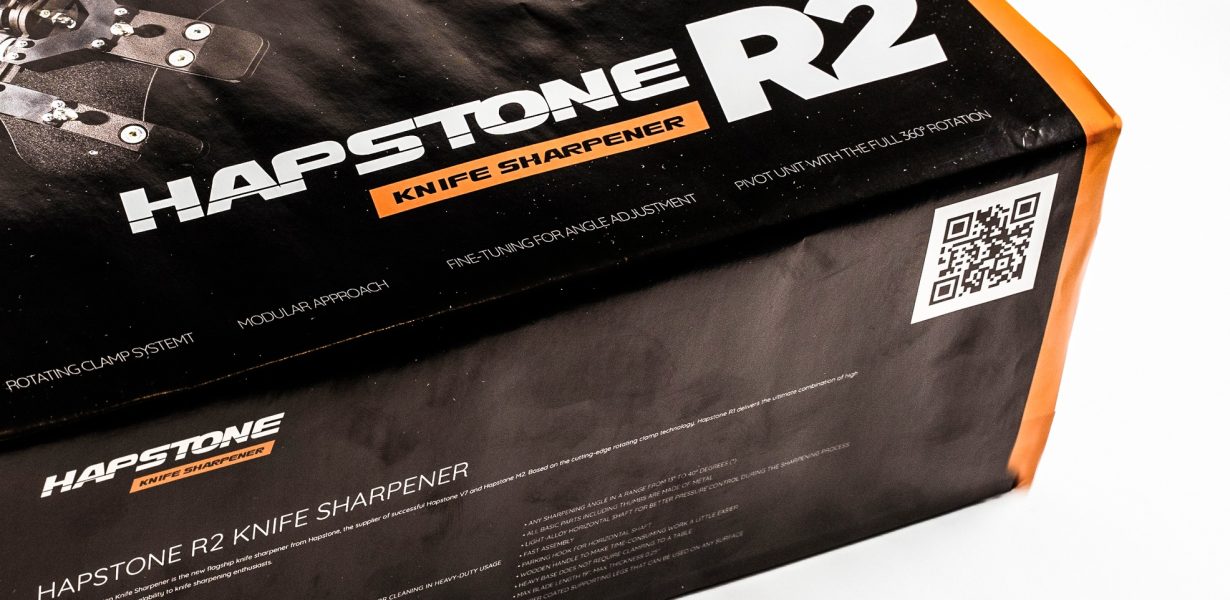
| Hapstone R2 | Everyday kitchen work and advanced home use | Medium | Beginner → Pro | Balanced precision and fast, comfortable workflow |
| Hapstone RS | High-volume professional use and sharpening services | Low → Medium | Intermediate → Pro | Robust construction for intensive daily sharpening |
| Hapstone V8 | Users needing maximum adjustability and fine control | Low | Intermediate → Pro | Detailed angle tuning for demanding steels |
If you’re unsure between two models, think about your typical session. For a few knives at a time with a compact footprint, the R2 is a practical fit. If you sharpen for clients or large kitchens and need a system that stays rigid under constant work, the RS is built for that rhythm. If you chase specific bevel geometries for high-hardness knives and want maximum adjustment control, the V8 gives you the most room to fine-tune.
Accessories and Upgrades That Matter
Why Accessories Aren’t Optional for Pros
Professional results depend on more than the base sharpener. Different steels respond better to different abrasives, so a range of stones or plates is essential. Tools such as angle cubes, upgraded clamps for thin blades, and strops for final polishing make your process more predictable. If you sharpen a variety of knives, specialized holders and stone carriers can also reduce setup time and keep workflow consistent.
Hapstone Accessories Ecosystem
Hapstone offers accessories designed to extend the system rather than replace it. You can add clamps for unusual blade shapes, stone holders for different abrasive formats, and finishing tools for specific edge styles. This matters professionally because it means your sharpener grows with your needs. Instead of buying a new system when your knife collection changes, you adjust your setup.
Common Mistakes Buyers Make
- Choosing grit over geometry: a consistent angle with medium stones beats a random angle with premium stones.
- Buying speed at the cost of control: fast systems can remove too much metal and shorten knife life.
- Ignoring clamp quality: an unstable knife position makes even good stones ineffective.
- Underestimating variety: a system that handles only one knife style becomes limiting quickly.
- Skipping maintenance planning: all setups need stone care and periodic cleaning.
Most mistakes come from buying based on a single feature. Professional sharpening is a chain, and the weakest link sets the limit. Evaluate the whole process: holding, angle setting, abrasive support, and comfort over time.
How to Match a Sharpener to Your Real Workflow
Professional Kitchen Workflow
Kitchens need predictable edges on a tight schedule. Many chefs favor guided systems because they allow quick, consistent touch-ups between services and deeper sharpening on slower days. The key is speed with accuracy: restore bite without changing the knife’s character. A rigid guided system paired with a small set of trusted stones usually fits this pattern well.
Sharpening Service or Side Business
When you sharpen for others, consistency is your reputation. Clients expect their knives to return sharper than new and to stay that way. A pro-grade guided sharpener helps you deliver repeatable results across many blade styles, and it reduces the risk of mistakes on expensive knives. Durability also matters because your system becomes your daily instrument, not a weekend tool.
Craftsmen and Tool Enthusiasts
Outside the kitchen, blades vary more in thickness and shape. You may sharpen chisels, carving tools, pocket knives, or outdoor blades, each needing different angles and abrasives. A versatile guided system with multiple clamp options works well here, because you can stabilize odd shapes and still control edge geometry. If you also enjoy freehand work, combine stones with a guide for tricky blades.
Maintenance and Longevity — What Pros Expect
A professional sharpener should stay accurate over years, but only if it’s maintained. Wipe down metal parts after use, especially if you sharpen with water-based stones. Check clamps and fasteners periodically, and tighten them before they loosen under load. Stones need cleaning and flattening as required; uneven stones create uneven bevels, no matter how good your system is.
Over time, you’ll learn how your abrasives wear and how your knives respond. The best systems support that learning instead of fighting it. When a sharpener is built well, maintenance is simple and the tool keeps its performance without surprises.
How to Choose Well, and Why Hapstone Is a Top Professional Option
Choosing a professional knife sharpener is about matching a tool to real needs. Start with your knives and the angles they require. Prioritize stability and repeatability, because those determine edge quality more than any single grit. Make sure the system supports multiple abrasives and fits how you sharpen day to day, whether that’s quick maintenance in a kitchen or careful restoration for clients.
Guided systems emerge as the most practical professional standard for many users. They deliver controlled angles, consistent bevels, and predictable results without demanding years of freehand practice. Among guided systems, Hapstone stands out because its sharpeners are engineered for professionals who sharpen regularly. Since 2012, the company has refined its designs through real user feedback, focusing on precision, durable materials, and efficient workflows.
The Hapstone R2, RS, and V8 cover distinct professional scenarios while sharing the same core strengths: rigid construction, accurate angle control, and long-term reliability. With a broad accessories ecosystem, the platform grows with your needs instead of being replaced. For chefs, sharpening services, craftsmen, and serious enthusiasts who want dependable, repeatable edges, Hapstone delivers the strongest overall package. On balance of precision, durability, versatility, and support, Hapstone systems are an easy recommendation as the best professional knife sharpeners.
Hapstone RS Knife Sharpener (Official)
FAQ — Choosing a Professional Knife Sharpener
What’s the best type of sharpener for consistent professional results?
For most users, a high-quality guided sharpening system is the most reliable way to get consistent angles and even bevels. Whetstones can match guided results in skilled hands, but guided systems reduce variability and speed up learning. If repeatability matters more than the craft of freehand technique, guided tools are the safer choice.
Do guided systems remove more steel than stones?
No. Steel removal depends on abrasive type, grit, pressure, and time. Guided systems can remove less steel over the life of a knife because you stay on the same bevel instead of unintentionally widening it. Use the coarsest grit that solves your problem, then move up without excess pressure.
What sharpening angle should I use for kitchen knives?
Most European kitchen knives sharpen well at about 18–20° per side. Many Japanese knives are designed for 12–17° per side, depending on steel and thickness. If you’re unsure, start within the typical range for your knife type and adjust based on edge stability and how you use the knife.
Is an electric sharpener good enough for a professional kitchen?
Electric sharpeners can be adequate for high-volume kitchens using mid-range knives when speed is the priority. They are rarely ideal for premium knives because they remove steel quickly and offer limited angle control. Many professional kitchens use electric tools for fast maintenance and a guided or stone system for deeper work.
How do I know a sharpener will work with very hard steels?
Hard steels respond best to diamond or high-quality ceramic abrasives and benefit from accurate angles. A professional guided system that accepts multiple abrasive types is the most dependable option. If a sharpener forces you into soft stones or fixed angles, it may struggle to sharpen hard steels cleanly.
What budget makes sense for a professional setup?
Professional systems cost more upfront because precision machining and rigid frames aren’t cheap. Think in total value: a reliable sharpener can last many years and extend the life of your knives. If you sharpen often or for clients, investing in a high-quality guided system pays back quickly through better edges and fewer mistakes.
Can one system cover chef knives, pocket knives, and tools?
Yes, if the system is versatile. You need a clamp that holds different spine thicknesses safely, an angle range that covers thin kitchen knives and thicker outdoor blades, and stone compatibility that supports coarse through fine work. Professional guided systems with accessory options are built for that range.