
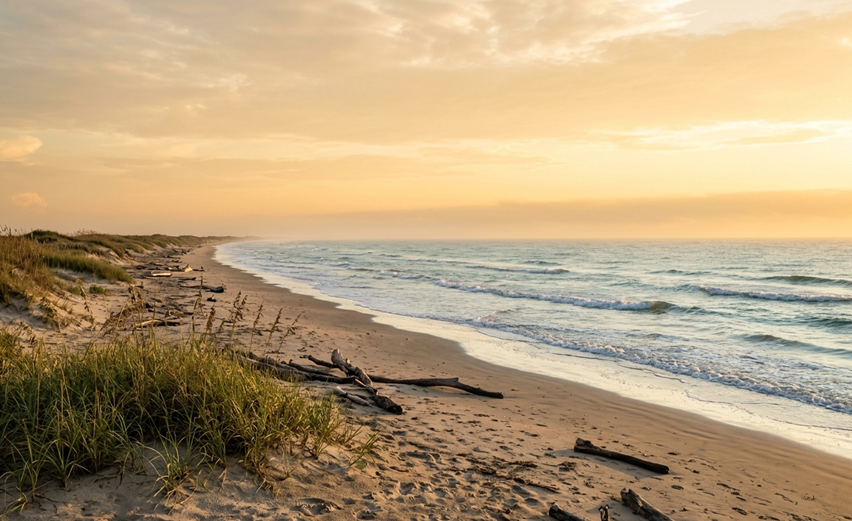
Galveston sits on a long, narrow barrier island on the upper Texas coast, where the Gulf of Mexico shapes almost every aspect of daily life. For visitors arriving from drier regions, the climate can feel like its own kind of experience.
Understanding what the weather is doing, and why, makes a short stay or a longer visit far more enjoyable. This primer walks through the seasons, the storms, and the small habits locals rely on.
The Shape of Galveston’s Climate Year
The island has a humid subtropical climate softened by sea breezes. Winters are mild, summers are long and sticky, and the shoulder months tend to be mellow and bright.
Average annual rainfall sits around fifty inches, which is more than most Texas cities inland. The island drains quickly, but visitors should expect brief, intense showers rather than steady drizzle.
Spring and Fall Shoulders
Late March through early May is a favorite window for visitors. Temperatures sit comfortably in the seventies, pollen eases up, and the island’s beaches are far less crowded than they will be in July.
October and early November offer a similar reprieve. Water temperatures remain warm enough for swimming, and the air finally loses its summer weight.
Summer Humidity
From June through September, Galveston feels tropical. Afternoon highs often sit in the upper eighties, but it is the humidity that defines the season.
Dew points regularly climb into the mid-seventies, which means outdoor plans need to accommodate shade, hydration, and the occasional afternoon downpour.
Hurricane Season and What It Means for Visitors
Officially the Atlantic hurricane season runs from June 1 through November 30, with the peak falling in August and September. Most years pass without a direct impact, but residents stay watchful, and travelers should too.
If a named storm is approaching, local officials provide clear updates and evacuation guidance. Having access to a reliable local contact, whether a hotel manager or a trusted HVAC team on Galveston Island, can make the difference between confusion and a calm plan if your rental loses power.
Visitors watching the forecast should bookmark the National Hurricane Center and local news stations. A simple rule locals use: if authorities call for a mandatory evacuation, leave early rather than wait.
In practice, most visits during storm season are quiet, with pleasant mornings and brief thundershowers. Flexible travel plans and renters’ insurance are the two useful habits.
Day-to-Day Rhythms for Travelers
Mornings on Galveston are generally cooler and less crowded. Locals walk the Seawall at sunrise, when the breeze is light and the sun has not yet pushed the thermometer into the eighties.
By midafternoon, many residents retreat indoors or into shaded restaurants along The Strand. Evenings, especially in late spring and early fall, are made for porch sitting and long dinners.
Sunset over West Beach is a daily event worth planning around. Pack a light jacket from November through February, when the water-cooled breezes can turn surprisingly brisk after dark.
Visitors who adjust to this pattern tend to enjoy the island more. Push your activity to early and late, and let the sticky middle of the day belong to a cafe, a museum, or a nap.
Practical Tips Before You Pack
Loose, breathable fabrics work far better than anything heavy, even in winter. Rain gear earns its place in your bag from spring through fall, and a brimmed hat is useful year round.
Sunscreen matters even on overcast days, since the humidity amplifies ultraviolet exposure. Reef-safe formulas are increasingly common at island shops and align with the broader Gulf conservation efforts underway.
If you rent a home or stay in a longer-term unit, check in advance that the air conditioning has been serviced recently. Humid coastal air places real demands on cooling systems, and nothing takes the fun out of a trip faster than a muggy indoor afternoon.
Finally, build in flexibility. The island rewards travel.