
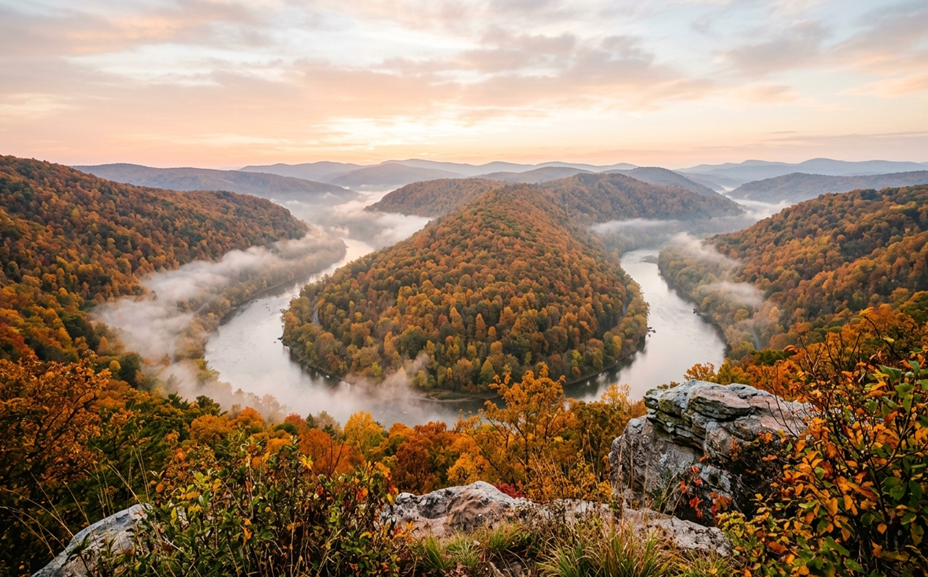
The Potomac Highlands fan out across the eastern spine of West Virginia, from Harpers Ferry at the river’s mouth to the sloping ridges west of Cumberland. For travelers from the Mid-Atlantic, this corridor offers a close, uncrowded alternative to the Blue Ridge further south.
The region is defined by water. The Potomac, Cacapon, and Shenandoah rivers braid through the valleys, each supporting its own cluster of towns, trails, and local traditions.
Getting There by Car
Most visitors reach the Highlands by road. From Washington, the trip takes under two hours by way of Interstate 70 and U.S. Route 522, cutting through farmland and foothills before descending into Berkeley Springs.
Alternate Routes
Travelers coming from Pittsburgh or western Pennsylvania often prefer Interstate 68, which crosses the Allegheny ridges and offers broader views across the ridgelines. The slower U.S. Route 50 traces a historic path across the state and makes for a scenic, if longer, approach.
The Towns Worth Slowing For
Berkeley Springs
Berkeley Springs is the entry point for many travelers. Its warm mineral springs, independent bookstores, and small galleries give it a disproportionate cultural weight for a town of its size.
Many visitors book quiet mountain cabins in West Virginia in the surrounding hollows and use the town as a base for day trips through the region. The combination of walkable downtown and forested outskirts is part of its appeal.
Paw Paw and Great Cacapon
Further west, Paw Paw sits in a river bend where the Potomac narrows between forested ridges. The town is the trailhead for the Paw Paw Tunnel, a 3,118-foot engineering landmark on the C and O Canal towpath, built in the 1830s and still passable on foot.
Great Cacapon, a quieter settlement to the east, offers river access and the understated charm of a place that has not courted development or hurry.
Romney
Romney, further into the Highlands, holds the distinction of being one of the oldest towns in the state. Its historic district stretches along High Street and includes buildings tied to its role during the Civil War and the long rebuilding that followed.
Natural Features
The parks and forests of the Highlands set the region apart from the more trafficked destinations to the north and east. Public land is abundant, and access points are easy to find.
Cacapon Resort State Park
Cacapon Resort State Park sits ten minutes south of Berkeley Springs. Its 6,000 acres include a 2,300-foot ridge, a lake, and over 20 miles of hiking trails. The lodge atop the ridge offers wide views that reach into Maryland and Virginia on clear days.
Sleepy Creek and Prospect Peak
Sleepy Creek Wildlife Management Area, a short drive east, covers 23,000 acres of ridge-top forest. Prospect Peak, visible from much of the surrounding countryside, is often cited among the finest overlooks east of the Mississippi.
The viewing platform catches early-morning fog in the valley below. Autumn afternoons bring long, horizontal light across the river bend and the Potomac Valley beyond.
When to Visit
Spring
Spring arrives slowly in the Highlands. March is damp and leafless, but by late April the dogwoods and redbuds have begun to flower along the ridgelines, and streams run high and clear with snowmelt.
Summer
Summer temperatures remain cooler than in Washington or Baltimore. The forest canopy keeps the trails shaded, and river tubing on the Cacapon runs through August and into early September.
Fall and Winter
Autumn is the heavy season. Mid-October brings peak color across the hardwood forest, especially on the ridges above Berkeley Springs and Paw Paw. Winter is quiet, with occasional snow and short daylight hours; it suits travelers looking for solitude and long evenings.
The Potomac Highlands reward unhurried travel. The towns are small, the trails are long, and the distances between stops are short enough to let a weekend include everything and still leave time to pause along the way.